Illustrative Content Portals: One Engine, All Audiences
The content engine writes once and publishes everywhere: one enterprise portal for Ensign’s expertise and a local portal for every affiliated facility.
The Ensign Content Portal is content only, covering clinical excellence, resident life, care outcomes, choosing care and policy. It lends credibility to every facility and gives affiliate portals a library of articles to localize.
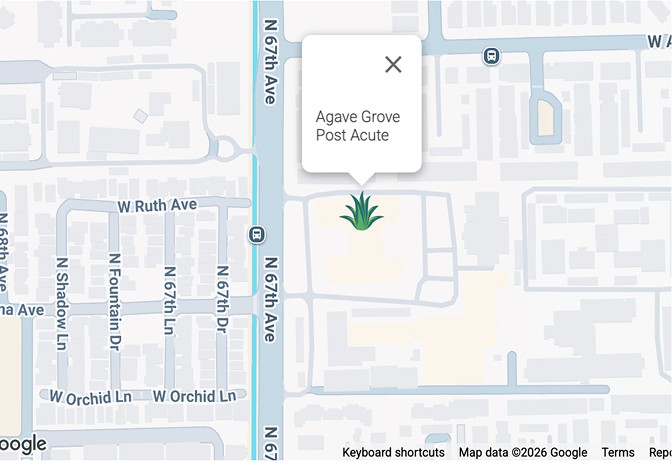
The Affiliate Content Portal turns the same articles into local answers for families in the 48-hour decision window, with the facility’s ratings, therapy team and one-tap calls and tour requests. It’s shown here for Agave Grove Post Acute in Glendale, Arizona.
Use the tabs below to switch between the Ensign Content Portal, an Affiliate Content Portal and a sample article page. Each is a working mockup: filter articles by topic, hover the Start Here guides to preview each one and click through to the article.
From call-light response to the smell of the hallway, the small details on a tour tell a family more than any brochure. Our Executive Directors share the 12 things they look for in their own buildings, from how quickly staff answer a call light to whether residents are up, dressed and engaged by mid-morning, so families know what to notice, what to ask and what a great facility gets right every day.
Skilled nursing keeps patients out of costlier hospital beds. A case for payment, staffing and survey rules that reward the outcomes that matter most to patients and families.
“Every patient who recovers in skilled nursing instead of a hospital bed saves the system money. Our rules should reward that, not penalize it.”
Insights and stories from the care team at Agave Grove Post Acute to help your family understand skilled nursing, plan a recovery and feel at home with us.
Skilled nursing is short-term, doctor-ordered care after a hospital stay, with nurses and therapists on site every day. Here is who it is for, what a typical day looks like and how long most people stay.
Rebuilding speech, swallowing and daily skills, one goal at a time.
6 min read
New articles on this topic are on the way.
Featured resident
Rosa G. is back in her garden
“The therapists here never let me give up. Six weeks later, I’m pulling weeds at home again.”
A retired schoolteacher, Rosa came to Agave Grove after a hip replacement. With daily physical therapy, a home-safety plan from our social worker and a lot of determination, she went home walking on her own.
What Medicare covers after a hospital stay, day by day
If the hospital says your parent needs skilled nursing, here is what Medicare Part A pays for, what you pay, and the one hospital detail that changes everything.
7 min read•Author Name, Title
Key takeaways
Original Medicare Part A can cover up to 100 days per benefit period
It requires a 3-day inpatient stay; “observation” time doesn’t count
Days 1–20 cost $0; days 21–100 carry a daily coinsurance
Medicare Advantage plans set their own rules and approvals
When a parent is ready to leave the hospital but not yet ready to go home, a short stay in a skilled nursing facility can bridge the gap. Medicare often pays for much of it, but only when a few conditions are met, and what you pay changes as the stay goes on. Here is what families should know before the discharge plan is set.
Who qualifies for coverage
Original Medicare covers a skilled nursing stay when all of these are true:
A three-day inpatient hospital stay. Your parent was formally admitted as an inpatient for at least three days in a row. The day they’re admitted counts, but the day they leave doesn’t, and time spent in the emergency room or under observation doesn’t count either, even if they stayed overnight.
A Medicare-certified facility, soon after discharge. They move to a skilled nursing facility that’s certified by Medicare, usually within 30 days of leaving the hospital. Most families go straight from the hospital, and the hospital’s case manager can help you check a facility’s certification and bed availability before discharge.
A daily need for skilled care. A doctor confirms they need care that only licensed nurses or therapists can provide, such as wound care, IV medications, or physical, occupational or speech therapy, on a daily basis. The care must be for the condition treated in the hospital, or for one that started while they were in the facility for that condition.
Inpatient or observation: ask today
A patient can spend nights in a hospital bed without being formally admitted. Those days are “observation” and don’t count toward the three-day requirement. If your parent is under observation for more than 24 hours, the hospital must give you a written notice explaining it.
The question to ask the hospital“Is my parent admitted as an inpatient, or here under observation?”
What’s covered during the stay
A semi-private room and meals
Skilled nursing care
Physical, occupational and speech therapy
Medications given during the stay
Medical supplies and equipment
Social services and nutrition counseling
What it costs, day by day
Days in the facility
What you pay (Original Medicare, 2026)
Days 1 to 20
$0 per day. The Part A deductible ($1,736 in 2026) is usually already met by the qualifying hospital stay.
Days 21 to 100
$217 per day in 2026, or up to $17,360 for all 80 days. Many Medigap plans pay this coinsurance.
After day 100
All costs. Medicaid, long-term care insurance or private pay may cover a longer stay.
If your parent has Medicare Advantage
Medicare Advantage plans must cover at least what Original Medicare covers, but the details differ. Many plans drop the three-day hospital requirement. Most need to approve the stay before admission, use a network of facilities, and set their own daily copays. Call the number on the back of the plan card, or ask us to call with you.
When coverage ends
Coverage stops when daily skilled care is no longer needed, which can be before day 100. You’ll get a written notice at least two days before Medicare-covered services end, and you can ask for a fast appeal. If your parent needs to stay longer, options include private pay, long-term care insurance, or Medicaid for those who qualify.
Knowing these rules ahead of time can save your family stress and money. Ask the hospital about your parent’s admission status early, keep track of the days in the facility, and check in with our admissions team before coverage changes so there are no surprises. If a longer stay is needed, planning early gives you more options.
Not sure which rules apply to you?Our admissions team can check your parent’s benefits before you decide. It’s free and takes a few minutes.